
What is Self Assessment?
Self Assessment is the system HMRC uses to collect Income Tax that is not taken automatically from wages or pensions. If you have income nobody is taxing at source, this is how you declare it.
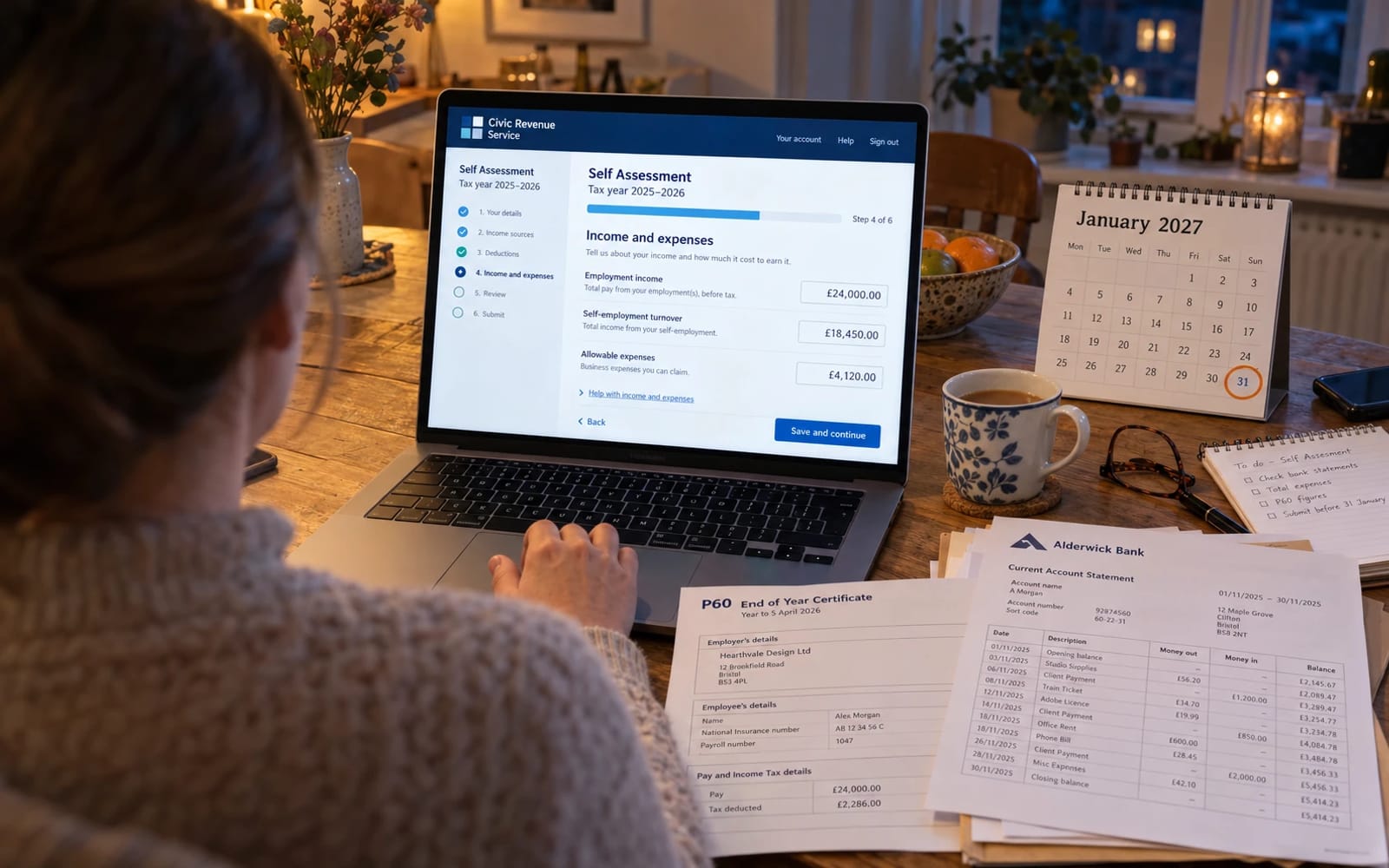
Who needs to file a return
The most common reasons a return is required include being self-employed as a sole trader, being a partner in a business partnership, receiving rental income, or receiving significant untaxed income such as dividends. Many company directors file because of dividend income from their own company. Employment income alone, taxed through PAYE, does not normally require a return.
The dates that matter
- The tax year runs from 6 April to 5 April.
- If you need to file for the first time, you must register with HMRC by 5 October after the end of the tax year in question.
- Paper returns are due by 31 October; online returns by 31 January following the end of the tax year.
- Tax owed is also due by 31 January. For the 2025/26 tax year that means 31 January 2027; see what to get ready.
Payments on account
This is the part that catches people out. Once your Self Assessment bill passes a certain size, HMRC asks for advance payments towards the next year's tax, in two instalments due 31 January and 31 July. In your first year this can feel like paying half as much tax again; in reality it is next year's bill arriving early. Knowing it is coming is the difference between a plan and a shock.
What happens if you miss a deadline
Filing late triggers an automatic penalty even if you owe no tax, and the penalties grow the longer the return stays outstanding. Interest is charged on tax paid late. The reliable cure is unglamorous: good records kept through the year, so the return is a summary rather than an excavation.
This note is general guidance, not advice on your circumstances. If Self Assessment applies to you, we prepare and file returns; if your records need work first, even better that we meet now.
Last reviewed 7 October 2026.